

Cracking the Notice-Period Puzzle
Speed has a price. It just isn’t the one most teams budget for.
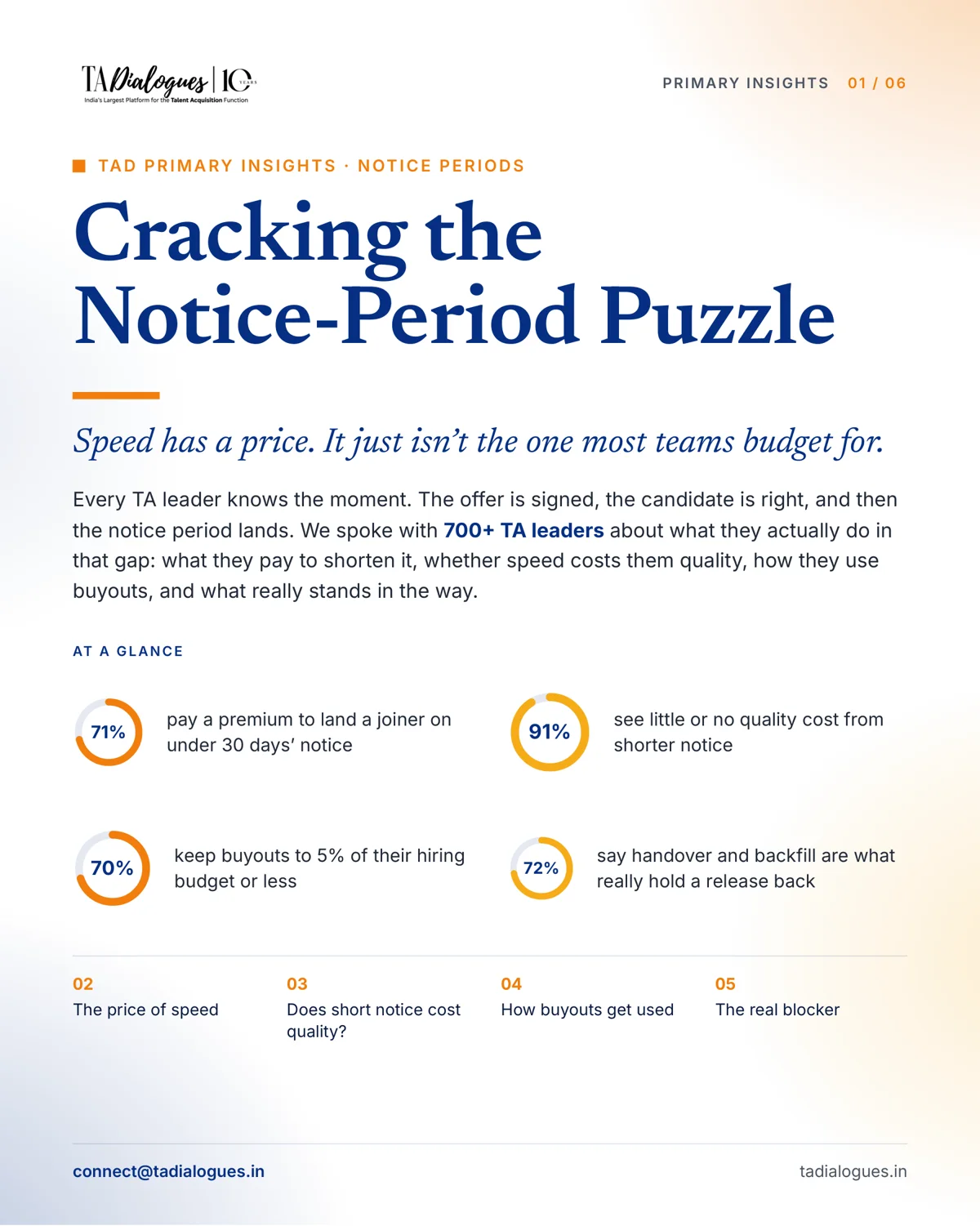
Every TA leader knows the moment. The offer is signed, the candidate is right, and then the notice period lands. We spoke with 700+ TA leaders about what they actually do in that gap: what they pay to shorten it, whether speed costs them quality, how they use buyouts, and what really stands in the way.
6 pages · PDF · Free with your email
At a glance
71%pay a premium to land a joiner on under 30 days’ notice
91%see little or no quality cost from shorter notice
70%keep buyouts to 5% of their hiring budget or less
72%say handover and backfill are what really hold a release back
Inside the report
One finding per chapter, and what to do about it.
- 02
The price of speed
Seven in ten pay for speed. Few pay much.
We asked: How much extra hike (over your original planned hike) do you typically extend to secure a candidate with <30 days notice?
What to do. Agree the speed band before the offer, not during it. A pre-approved 6–10% lets recruiters close without an escalation. Anything above 10% puts you outside what most of your peers would pay, and deserves a business case.
- 03
Shorter notice, lower quality?
Short notice rarely costs quality. When it does, it’s the exception.
We asked: If you prioritize reduced notice period (active candidates), how has the candidate quality compared to your baseline?
What to do. Judge short-notice candidates on fit, not on timing. Ask why they’re free to move now, lean on references, and save the extra scrutiny for the cases that genuinely raise a question.
- 04
How buyouts get used
Nearly everyone uses buyouts. Most keep the spend small.
We asked: How deliberately do you use notice-period buyouts as part of your offer strategy?
What to do. Treat a buyout as an escalation, not a habit. Decide upfront which roles qualify, whether business-critical, revenue-linked or slow to ramp, and cap how much of the hiring budget it can take.
- 05
The real blocker
The blocker is rarely money. For 91%, it sits with the current employer.
We asked: Apart from employer policy/contract constraints, which single blocker most prevents earlier releases or shorter notice periods?
What to do. Start the joining conversation at offer stage, not after acceptance. Help the candidate map their handover before they resign, and stay close through notice, because one in five will feel a pull to stay.
- 06
Conclusion
Speed is a process outcome, not a purchase.
The bottom line. The teams that bring people in faster won’t be the ones that spend the most. They will be the ones that treat the notice period as part of the hiring process, rather than the wait that comes after it.
Read every chart in the full report.
6 pages, free. Just tell us where to reach you.

The TAD Times newsletter
Hiring trends, leadership perspectives and what's next on the calendar, straight to your inbox.
Read the latest edition on LinkedIn