
Reneges: Prediction and Prevention in India GCCs
Accepted is not the same as hired. Three quarters of the risk arrives afterwards.
This report looks at offer-to-join conversion across India GCCs: the signals that come before a renege, where they cluster, and what works when conversion dips. It draws on conversations with 700+ TA leaders. It isn’t a story about teams in trouble. Most convert well. It’s about where the remaining losses come from, and they come from a stretch most hiring processes treat as waiting.
8 pages · PDF · Free with your email
At a glance
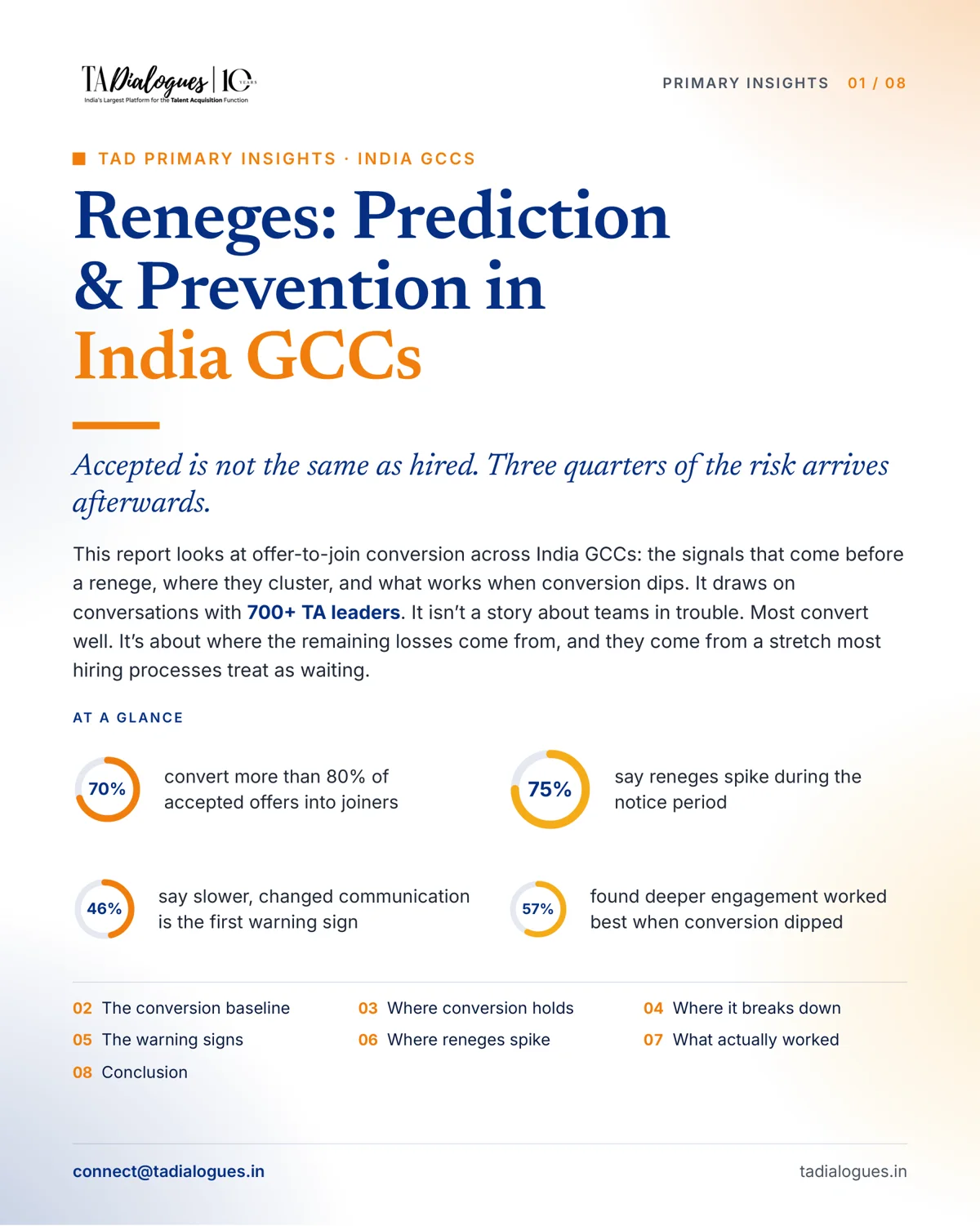
70%convert more than 80% of accepted offers into joiners
75%say reneges spike during the notice period
46%say slower, changed communication is the first warning sign
57%found deeper engagement worked best when conversion dipped
Inside the report
One finding per chapter, and what to do about it.
- 02
The conversion baseline
Most GCCs convert well. The useful question is what the last 30% have in common.
We asked: What is your organisation’s offer-to-join rate over the last six months?
What to do. Don’t judge conversion by the average. Find the roles and bands that fall below 80%: that’s where the losses sit, and where the fixes will pay back.
- 03
Where conversion holds
Experience holds. Nearly nine in ten point to bands with seven years or more.
We asked: Which experience band currently achieves your best offer-to-join performance?
What to do. Senior hiring is probably not where the leak is. Aim retention effort at the bands that convert least, not evenly across every offer.
- 04
Where it breaks down
Nine in ten weak spots sit in one stretch of a career: three to nine years.
We asked: Which experience band currently shows your lowest offer-to-join performance?
What to do. Treat three-to-nine-year offers as higher risk by default: more contact during notice, an earlier read on counter-offers and a backup kept warm.
- 05
The warning signs
The first sign is rarely a refusal. It’s a slower reply.
We asked: What signals most reliably predict that an accept may not join?
What to do. Keep a contact rhythm after acceptance, so silence has something to be measured against. A reply that slows from hours to days is the cue to call, not to wait.
- 06
Where reneges spike
Three quarters land during notice. The req is closed and the risk is just starting.
We asked: Where do reneges spike most for experienced hires?
What to do. Don’t close the req at acceptance. Keep it open, and owned, until the person actually walks in on day one.
- 07
What actually worked
Engagement beats money by more than four to one.
We asked: When offer-to-join dips below acceptable, which action worked best?
What to do. Reach for engagement before compensation. A manager call, a team connect and a first-week plan cost little and answer what the signals describe.
- 08
Conclusion
Treat notice as part of the process, not the gap before it starts.
The bottom line. An accepted offer isn’t a hire. The organisations that convert best will be the ones that give the notice period an owner, a rhythm and a plan.
Read every chart in the full report.
8 pages, free. Just tell us where to reach you.
The TAD Times newsletter
Hiring trends, leadership perspectives and what's next on the calendar, straight to your inbox.
Read the latest edition on LinkedIn